YOUTH4PEACE Hackathon

YOUTH4PEACE Hackathon

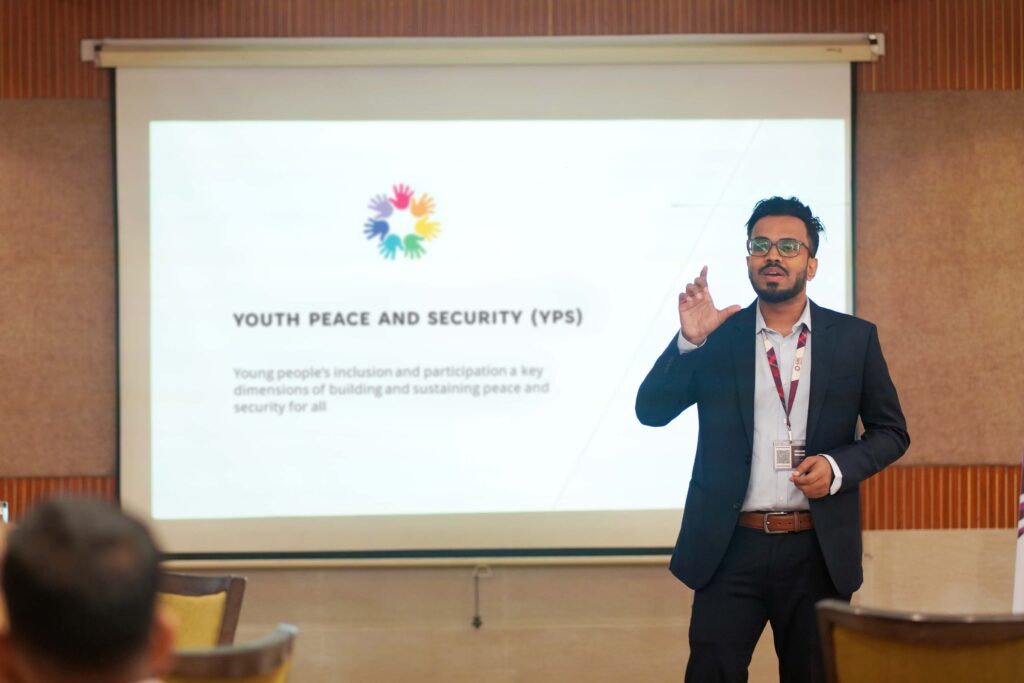
Youth for Peace International, in collaboration with UNOY, led a multi-country #Youth4peace Hackathon followed by an in-person retreat in Sri Lanka to strengthen Youth, Peace and Security (YPS) implementation across Asia. This program brought together young peacebuilders from across Asia to design creative campaigns, deepen their understanding of the Youth, Peace and Security agenda, and co-create strategies for long-term action in their communities.

Background and Rationale

Asia and the Pacific is home to more than 45 percent of the world’s youth, yet most national youth policies still do not clearly recognise young people as partners in peace and security. Many of these policies were developed before the adoption of UNSCR 2250 (2015) and remain unrevised even after UNSCR 2419 (2018) and 2535 (2020). Young people in conflict-affected contexts are often stereotyped as perpetrators or victims, while their complex roles as peacebuilders remain under-recognised.​ The Youth4peace Hackathon was designed to respond to this gap by enabling youth-led organisations to create accessible, local-language content that makes the YPS agenda relatable to public officials and young people at local and national levels.

#Youth4peace Hackathon

The Youth4peace Hackathon aimed to develop the competencies of youth-led organisations and young peacebuilders to effectively reach and work with other young people on YPS implementation, raise awareness among local youth and public officials using creative materials on the Youth, Peace and Security (YPS) agenda in local and national languages, and strengthen ties between youth-led organisations from different countries for future cooperation, cross-learning, and support through the AsiaYAT initiative.

A comprehensive Handbook for YPS Awareness Campaigns was developed as a key resource for the Youth4peace Hackathon, providing youth-led peacebuilding organisations and young peacebuilders with ready-to-use tools to launch effective online awareness initiatives. The handbook has customisable graphics and posters available as canva templates and can be adapted by localising images, translating into local languages, and adding organisational logos. Best practices in the handbook includes focusing on trending tags for global visibility; tips on posting timings, videos, stories, polls, quizzes, livestreams, locations, and tagging to maximise reach without compromising safety.

Add Your Heading Text Here

Creative Outputs & Reach

WORK AREAS

The Hackathon led to a multi-platform, multi-country campaign that significantly boosted awareness of the YPS agenda.

  • A 21-day campaign on Youth, Peace and Security ran in India, Bangladesh, Sri Lanka, Nepal, Pakistan and the Philippines, reaching a total of 120,808 people across platforms.​
  • Video content included 25 interviews with young peacebuilders, 13 social media reels on YPS, 5 explanatory YPS videos and 5 stakeholder videos, amplifying youth voices and practical experiences from the region.​
  • Mindfulness practices for young peacebuilders, adapted from a Youth for Peace International handbook, reached 3,674 people across platforms.​
  • Eight awareness sessions on YPS implementation were conducted across the six focus countries, with 4 in-person and the rest online, combining explanations of the YPS resolutions, national context presentations, and community-level experiences.​
  • Participants and partners produced a series of blog posts and articles documenting local YPS realities and youth-led peacebuilding initiatives in Asia.

Advocacy & Policy Engagement

WORK AREAS

Advocacy missions were a core component of the Hackathon strategy to link grassroots youth work with decision-makers.​

  • A total of 37 advocacy missions were conducted with stakeholders including embassies, UN officials, lawyers, INGOs and government representatives.​
  • These engagements supported increased awareness of youth roles in peace and security, stronger collaboration between youth peacebuilders and institutions, and more youth-centred perspectives in policy discussions.​
  • One concrete policy outcome was in Bangsamoro, where young people and government officials jointly prepared to launch the first National Action Plan on Youth, Peace and Security 2023–2028 on 15 December 2023.​

Mindfulness & Wellbeing

WORK AREAS

Mindfulness was positioned as integral to sustainable peace work and collective resilience.​

  • Participants explored what mindfulness means to them, naming elements such as feeling present, experiencing safety, acknowledging emotions, and connecting with nature.​
  • They learned about components of mindfulness (purposeful attention, being in the present moment, non-judgemental awareness) and nine key attitudes, including beginners’ mind, non-judging, acceptance, letting go, trust, patience, non-striving, gratitude and generosity.​
  • Practices included body movement, nature walks, walking and eating meditation, breath awareness and guided meditations, as well as mindfulness through arts and swimming.​
  • Participants created finger-painted canvases reflecting their emotions and gifted them to each other with messages, strengthening community care.​

Outcomes and Impact

Participants reported feeling energised, more connected to the regional network, and better equipped to implement YPS in their communities after the retreat.​

Key outcomes included:

  • Increased individual understanding and confidence to speak about the YPS agenda and its local implementation.​
  • Stronger cross-country relationships and a shared sense of belonging within AsiaYAT and the UNOY network.​
  • Concrete commitments from hackathon participants, such as organising more learning sessions, integrating YPS into other trainings, designing localized mindfulness activities, and pursuing grants for YPS implementation.​
  • Development of a regional crowdfunding campaign and visibility through participation in the Hill Country Youth Peace Summit in Kandy, where participants presented YPS and their national contexts to over 250 young people.​